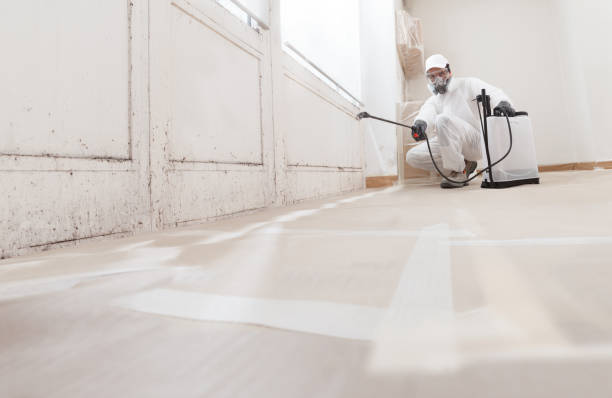
WQB Mold Removal's Cedar crew treats roof deck staining while identifying whether ice dams, insulation gaps, or ventilation are the actual driver behind it.
📞 Call +1-844-578-1604 Now

WQB Mold Removal's Cedar attic service pairs mold treatment with the ice dam and condensation diagnosis most cold-climate attic problems actually need.
A Cedar attic treated without fixing the underlying heat-loss issue is a job likely to repeat next winter.
What sets our Attic Mold Removal crew apart in Cedar.
Our Cedar techs recognize the specific staining pattern ice dams and winter condensation leave behind. Getting the cause right the first time saves a repeat Cedar, MI visit next winter. We check insulation R-value and coverage gaps while already assessing the mold.
Our technicians move safely across roof framing without damaging insulation or ceiling drywall below. We schedule carefully around weather when working a Cedar roof in colder months. Our Cedar roof-access gear meets standard safety protocol for winter work.
Every Cedar attic job includes checking soffit intake, ridge exhaust, and insulation coverage gaps. We'll show you exactly where the gap is before proposing a fix. We check insulation R-value and coverage gaps while already assessing the mold.
Contaminated insulation gets replaced to match your Cedar, MI property's original specification. New insulation only goes in once the surface beneath has been fully treated. Our Cedar roof-access gear meets standard safety protocol for winter work.
Every Cedar job gets scoped to the specific problem, not a generic checklist.

We test the treated surface afterward to confirm it's actually back to normal.
We identify where attic heat loss is melting roof snow unevenly, which is what actually causes ice dams in the first place.
Balancing intake and exhaust is often the biggest factor in whether attic mold returns.
Sealing these gaps addresses a root cause most Cedar attic treatments skip entirely.
Insulation touching an actively moldy roof deck gets removed rather than treated in place.
This final check is what separates a real fix from a Cedar attic that looks fine until next winter.
Here's what a Cedar attic mold job actually involves, from first call to final ventilation check.

A quick call helps our Cedar dispatcher send the right equipment on the first visit. Texting a photo ahead of time can speed up prep.
Our nearest available crew heads straight to your Cedar address with the gear this job actually needs. We arrive in marked vehicles with everything needed to start the assessment right away.
You'll know the full scope and price before we touch anything in your Cedar property. We'll explain the quote in plain language, not just hand you a number.
You get documentation proving the work was completed to standard. We'll walk the space with you before calling it finished.
A few recent stories from attic jobs around Cedar.

"They explained our ice dam problem in a way that finally made sense, and fixed the insulation gap causing it."|"Roof deck looks completely different, no more staining after this past winter." — Solveig H., Cedar
"Didn't just treat the mold, found the actual heat loss issue and sealed it."|"No more ice dams this winter for the first time in years." — Douglas K., Cedar
"Clean, professional work and they matched our insulation R-value exactly."|"Appreciated the honest explanation of what was actually causing the problem." — Ingrid W., Cedar
Roof-safe access techs are ready to schedule your Cedar assessment.
Call +1-844-578-1604Inside our Cedar coverage zone, same-day attic assessments are usually available outside of severe weather.
Our crews carry roof-safe access gear and insulation matched to common Cedar, MI R-value specifications.

Coverage extends to zip codes such as 49621
The questions that come up most with winter-pattern attic mold.

Ice dams and condensation from trapped warm air are a common Cedar culprit, different from a simple summer ventilation gap.
We address both together since they usually share the same root cause in Cedar, MI attics.
Only insulation that's contaminated and can't be cleaned gets removed and replaced, matched to your original R-value.
A standard job typically takes half a day to a full day, weather permitting for roof access.
Yes, though we coordinate scheduling around temperature and roof conditions for crew safety.